03 Web Developer
What is it Like Being a Software Engineer
Software engineers build and maintain the systems users interact with daily, working on front-end interfaces and back-end functionality. The role involves fixing bugs, developing new features, and collaborating with designers and marketing teams to ensure applications function properly. Understanding what full-stack and front-end work actually entails matters if you're weighing this career path.
Here's what the day-to-day work actually looks like.
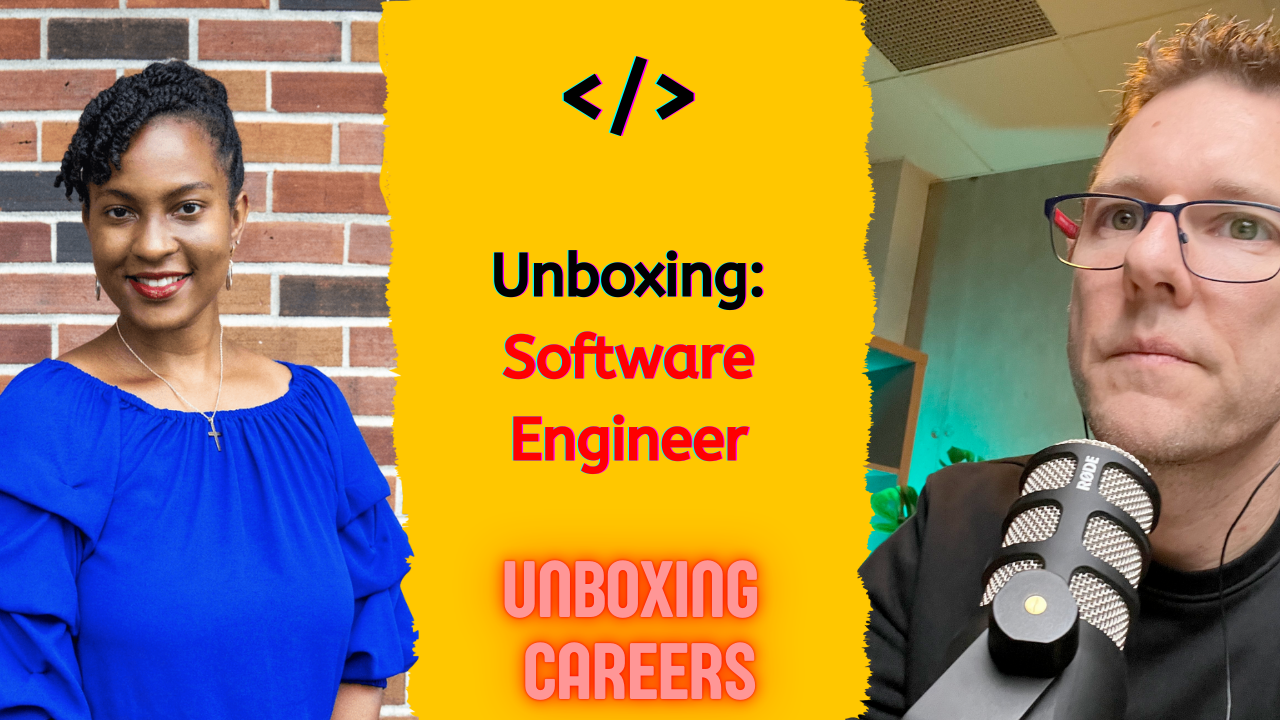
On this episode of the Unboxing Careers Podcast, we unbox the career of a software engineer.
Guest: Caroline Smith is a software engineer and web developer. She graduated with a Bachelor of Science in Computer Science and Software Engineering from Auburn University. Smith also founded The Introverted Misfit, which helps socially awkward and anxious people create fulfilling personal and work relationships.
Follow Caroline on Linkedin
What Does a Software Engineer Do? Exploring Full Stack and Front End Development
When you hear the term “software engineer,” it can mean a lot of different things. In this case, the role includes working as a full-stack software engineer and also focusing specifically on front-end development.
As a full-stack developer, the job involves working on both the front end and back end of a company’s software product. That means maintaining the system, fixing bugs, and building new features that customers use every day. On the front-end side, the focus shifts to what users actually see and interact with, such as websites and application interfaces. This can include collaborating with designers and marketing teams to make sure everything looks and functions the way it should.
What Full Stack and Front End Work Really Includes
Maintaining and improving an existing software product
Fixing bugs and solving technical problems
Building new features that customers request
Designing and updating website interfaces
Working with developers, designers, marketers, and leadership
If you are in high school and enjoy both problem-solving and creativity, this career allows you to combine technical thinking with visual design. In college, you might discover that you prefer either back-end logic or front-end design, and that is completely normal.
A Day in the Life of a Software Engineer
A typical week is often a mix of independent work and collaboration. Around 70 percent of the time can be spent working solo, focused on writing or improving code. The remaining time may include messaging senior developers with questions, attending team meetings, and presenting updates to marketing or leadership teams.
One important part of the job is communication. You are not just talking to other engineers. You also need to explain technical ideas to people who may not understand coding at all. That means breaking down complex problems into clear, simple language.
What the Weekly Workflow Might Look Like
Working independently on coding tasks
Fixing bugs and adding new features
Asking senior engineers for guidance
Meeting with marketing and leadership teams
Explaining technical updates in simple terms
If you are in high school, start practicing how to explain complicated ideas in simple ways. In college, group projects are a great opportunity to build both technical and communication skills.
Do You Need a Computer Science Degree to Become a Software Engineer?
In this case, the path included earning a Bachelor of Science in computer science and software engineering from Auburn University. However, not every skill used on the job was learned in college.
For example, front-end languages like JavaScript, HTML, and CSS were not covered in depth during college courses. Those were learned through an online training program during the first two weeks on the job. That shows how quickly technology changes and how important it is to keep learning.
Education and Learning Path Insights
A computer science degree can build a strong technical foundation
Many coding skills can be learned online
Employers may provide additional training
You do not need to know everything before getting hired
If you are in high school, consider taking any available coding classes. If your school does not offer them, explore online platforms. In college, focus on understanding core concepts, not just memorizing syntax.
Skills That Matter More Than You Think
One of the biggest lessons in this career is learning to think long-term. Thinking long term means building solutions that are scalable and maintainable, while developing patience and discipline in your work. In coding, it is easy to take shortcuts that solve a problem quickly. However, those shortcuts can create bigger issues years later when someone else has to fix or update the code.
Core Skills for Success in Software Engineering
Long-term problem-solving
Clear communication with non-technical teams
Willingness to ask questions
Confidence in learning new programming languages
Ability to work independently
If you are in high school, practice thinking beyond quick fixes in all areas of life. In college, take your projects seriously and build them as if they will be used long after you graduate.
How to Stand Out When Applying for Your First Software Engineering Job
Breaking into the workforce can feel overwhelming. Many job postings ask for experience, but how do you get experience without already having a job?
The key is using your class projects as part of your portfolio. During interviews, you can explain what you built, the challenges you faced, and how you solved them. Even if you only know one programming language, showing that you understand the core concepts can make a strong impression.
Ways to Strengthen Your Job Applications
Build a portfolio using school projects
Be honest about what you know and what you are still learning
Show confidence in your ability to learn new tools
Focus on understanding concepts, not just memorization
If you are in college, treat every major project as if it could be shown in an interview. That mindset alone can separate you from other candidates.
What Are Common Misconceptions About Software Engineers?
A common misconception is that developers memorize everything and type code perfectly from memory. In reality, much of the job involves researching solutions and learning from how others have solved similar problems.
Having a strong foundation is important, but you do not need to memorize every detail. Problem-solving and resourcefulness matter more.
Myths vs Reality
Myth: developers know every line of code by heart
Reality: developers frequently research solutions
Myth: coding is constant, fast typing
Reality, coding involves thinking, testing, and refining
If you are considering this career, know that curiosity and persistence are just as important as technical skill.
What Is the Work-Life Balance Like?
Working from home can be a benefit, but it also comes with challenges. When your computer is always nearby, it can be tempting to keep working beyond normal hours. Time management becomes extremely important.
In addition to the software engineering role, there is also a side business focused on helping people improve communication skills and overcome social anxiety.
Work Life Considerations
Remote work can blur boundaries
Deadlines may require extra focus
Time management is essential
Side projects can add fulfillment, but require discipline
If you are in high school or college, start practicing time management now. Learning how to set boundaries will help you in any career.
Is Software Engineering Right for Introverts or Extroverts?
The field tends to attract more introverted personalities who enjoy focused, independent work. However, extroverts can absolutely succeed. It depends on how you navigate collaboration and communication within a technical environment.
Personality Fit
Introverts may enjoy independent coding time
Extroverts can thrive by leading discussions and collaborating
Communication skills are important for everyone
Teamwork is always part of the job
No matter your personality type, there is space for you in this field if you are willing to adapt.
Conclusion
If you are in high school and unsure about your future, remember that you do not need to have everything figured out right now. Sometimes interests develop later, even in college. Stay open to new subjects, try different classes, and do not be afraid to pivot if something is not the right fit. Your career path does not have to be perfect; it just has to keep moving forward.
Web Developer/Software Engineer Career at a Glance:
Software engineers can have different roles, such as full-stack developers and front-end developers.
Front-end development can be easier than back-end development and involves working with designers and marketers.
Building a portfolio with class projects is important for standing out in the job market.
Getting involved in organizations related to your field can provide networking opportunities and access to resources.
Developers don't need to memorize everything and can rely on online resources for help.
Software engineers can have diverse interests outside of their careers, such as gardening.
FAQs About Becoming a Software Engineer
What degree do you need to become a software engineer?
Many software engineers earn a computer science or software engineering degree. However, some skills can be learned online. A degree can provide a strong foundation, but continuous learning is essential in this field.
Can you become a software engineer without coding experience in high school?
Yes. It is possible to start learning coding in college. Taking introductory courses and practicing through projects can help you build the skills needed for a job after graduation.
What skills are most important for software engineers?
Long-term problem-solving, communication skills, and the ability to learn new technologies are critical. You also need patience and attention to detail.
Is software engineering a good career for introverts?
Yes. Many people in the field are introverted and enjoy independent work. However, communication and teamwork are still important parts of the job.
Do software engineers use AI to write code?
AI tools are emerging, but they are not always heavily used in every company. Engineers still rely on foundational knowledge and problem-solving skills.
Other Technology & Engineering (STEM) Careers
Listen on: Spotify | Apple Podcasts | YouTube | Amazon Music
Interested in being a guest or partnering with us? Contact us here.