48 Public Relations
What is it Like Working in Public Relations (PR)?
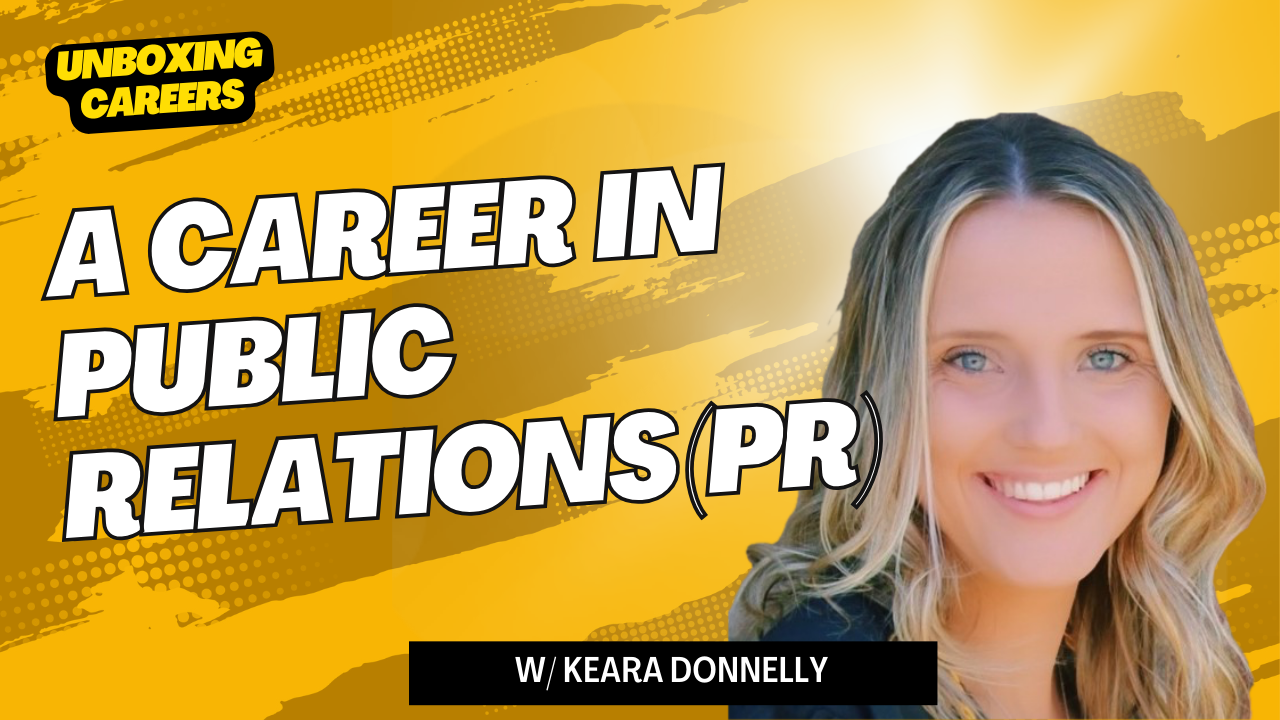
Guest: Keara Donnelly is an Account Director at Berkeley Communications. She leads the day-to-day account management across various clients and supports the PR programs and strategy in North America. Keara has worked across B2B and consumer tech, higher education, healthcare, consumer travel, human resource services, luxury travel and hospitality, corporate communications, nonprofit, and lifestyle.
Connect with Keara:
Listen: Spotify | Apple Podcasts | Amazon Music
What Does a Public Relations Account Director Actually Do?
If you’ve ever wondered who helps companies get quoted in the news or land articles in major publications, this is where public relations comes in. In this episode of Unboxing Careers, Keara Donnelly breaks down what life looks like as an account director at a PR agency and how storytelling sits at the center of everything she does. In her role at Berkeley Communications, she manages multiple client accounts across B2B tech, healthcare, and higher education, leading client calls and guiding teams on pitch ideas and thought leadership topics.
Day to day, Keara’s job is about helping clients cut through the noise. That means understanding what’s happening in the news, finding where a client’s expertise fits naturally, and pitching journalists with relevant, timely ideas. If you’re in high school or college and enjoy writing, following the news, and thinking strategically, this kind of work might surprise you with how creative it can be.
What this role involves
Managing multiple client accounts at once
Leading strategy calls and brainstorming sessions
Pitching stories and expert commentary to journalists
Measuring success through media coverage and brand awareness
How Do You Get Started in Public Relations?
Keara’s path into PR started earlier than most. While still in high school, she attended a pre-college program at Marist College focused on sports communications. That experience exposed her to different communication careers and helped PR stand out as something she truly enjoyed. In college, she studied strategic communications at St. Bonaventure University, where she took PR-specific courses that confirmed she was on the right path.
College wasn’t just about classes. Keara stressed how important it was to get involved on campus by writing for the school newspaper and interning in her university’s communications office. Those experiences, combined with an internship at Merino Public Relations, helped her build real skills before graduation. If you’re in college now, this is your reminder that what you do outside the classroom matters just as much as your major.
Steps that helped her break in
Studying communications or a related major
Writing for campus publications
Taking internships seriously and early
Building experience before graduating
What Is the Typical Career Path in PR?
Most people don’t jump straight into senior roles in PR. Keara started as an assistant account executive, where she focused on building media lists, pitching stories, monitoring the news, and learning how journalists work. Over time, she moved between agencies and industries, including nonprofit, corporate communications, and luxury travel, before landing in her current role.
One important takeaway is that early in your career, flexibility matters. While you might dream of working only in sports or music PR, Keara explained that many junior roles require you to be open to different industries. As you gain experience and seniority, you usually get more say in the types of clients you work with.
What early PR roles usually include
Supporting senior team members
Writing and sending media pitches
Researching journalists and outlets
Learning client management basics
What Does a Typical Week in PR Look Like?
PR is not a job where every day looks the same. Some days are packed with client meetings, while others are focused on research, writing pitches, or preparing reports. Keara described weeks where she might be staffing interviews with journalists, building presentations, or helping teammates refine story ideas.
A lot of time is spent at a computer, responding to emails and staying current with the news. There may be opportunities to attend events, depending on the agency; however, the core of the job is communication and organization. If you like variety and don’t mind juggling multiple tasks, this pace can be exciting rather than overwhelming.
How time is often split
Client calls and internal meetings
Researching journalists and trends
Writing and refining pitches
Managing emails and deadlines
What Skills Matter Most in Public Relations?
Strong communication skills are non-negotiable in PR. Writing clearly, speaking confidently with clients, and staying organized all come into play daily. Keara also emphasized motivation and the ability to keep up in a fast-paced environment, where news cycles move quickly, and priorities can change.
One skill that often surprises people is email writing. Keara pointed out that knowing how to write short, clear, and personable emails is something you don’t always learn in college, but it makes a huge difference when you’re communicating with executives or journalists.
Skills successful PR professionals share
Clear written and verbal communication
Strong time management
Attention to detail
Confidence when advising clients
What Are the Biggest Challenges in PR?
Time management is one of the hardest parts, especially when you’re starting out. Balancing multiple clients, deadlines, and expectations can feel overwhelming. Keara shared that learning what needs to be done now versus what can wait is a skill that develops over time.
Another challenge is managing client expectations. Sometimes a client wants media coverage that just isn’t realistic or relevant. Being honest, even when it’s uncomfortable, is part of the job. If you’re early in your career, leaning on managers for guidance can help you navigate those tough conversations.
Common challenges to expect
Managing multiple deadlines
Setting realistic client expectations
Staying calm in a fast-moving environment
Learning to prioritize effectively
What Makes a Career in PR Rewarding?
Despite being a behind-the-scenes role, PR can be incredibly rewarding. Keara talked about the excitement of seeing a client land a meaningful piece of coverage and knowing you helped make that happen. Even trade publications, which target specific industries, can feel like big wins because they reach the right audience.
She also finds fulfillment in mentoring junior colleagues and watching them succeed. If you enjoy helping others grow and thrive, PR offers plenty of opportunities to do that while building your own career.
Rewards people love about PR
Seeing clients succeed in the media
Positive feedback from clients
Mentoring and supporting teammates
Building strong professional relationships
What Should Students Know Before Choosing a Career in PR?
PR is competitive, especially when it comes to landing that first job. Keara strongly recommended building experience early through internships, campus jobs, and networking with alumni and recruiters. Reaching out to recruiters or HR professionals directly can open doors before jobs are even posted.
Work-life balance can vary by agency and week. Early in your career, you may work longer days to prove yourself, but most weeks stay close to a standard full-time schedule. Salaries are realistic for getting started, especially depending on your living situation, though PR isn’t typically a “get rich quick” career.
Things to keep in mind
Experience matters as much as your degree
Networking can lead to hidden opportunities
Early years may require extra effort
Stability improves as you gain experience
Final Thoughts for Students Exploring PR Careers
If you’re in high school or college and enjoy writing, storytelling, and staying connected to what’s happening in the world, public relations is worth exploring. It’s a career built on relationships, curiosity, and persistence. You may not always be in the spotlight, but the impact you make behind the scenes can be just as powerful and fulfilling.
PR Career Takeaways
Public relations is centered on storytelling, helping companies share their expertise in ways that naturally fit into the news.
Most PR careers start with a communications or journalism-related degree, but hands-on experience matters just as much as coursework.
Getting involved on campus, such as writing for a student newspaper or working in a communications office, can be just as valuable as off-campus internships.
Early PR roles focus on research, writing pitches, and learning how journalists work, not being the public face of a brand.
As a junior professional, it is important to be open to different industries, even if you eventually want to specialize.
Strong email writing skills are essential and often more important than people expect.
PR is a fast-paced field that requires good time management and motivation, especially when handling multiple clients.
Success in PR is measured by media coverage and brand awareness, not personal recognition.
Building real relationships with journalists matters more than sending mass or generic pitches.
Managing client expectations honestly is a key part of the job, even when conversations are uncomfortable.
The most rewarding moments come from seeing clients land meaningful coverage and celebrating team wins.
PR offers a stable career path for graduates, though it is not typically a field where people become wealthy overnight.
Interested in other careers? Check out these episodes:
Listen on: Spotify | Apple Podcasts | YouTube | Amazon Music