56 Urologist
What Is It Like Being a Urologist?
Urologists treat conditions of the urinary tract and male reproductive system, balancing office visits with surgical work on issues like kidney stones, prostate cancer, erectile dysfunction, and male infertility. The work typically splits between three days of clinic and two days of surgery each week, with procedures ranging from penile implants and vasectomy reversals to kidney stone removals and prostate surgeries.
The field has strong demand, one of the better work-life balances among surgical specialties, and a personality culture that tends to be laid-back and humor-friendly. Here's what the day-to-day work actually looks like.
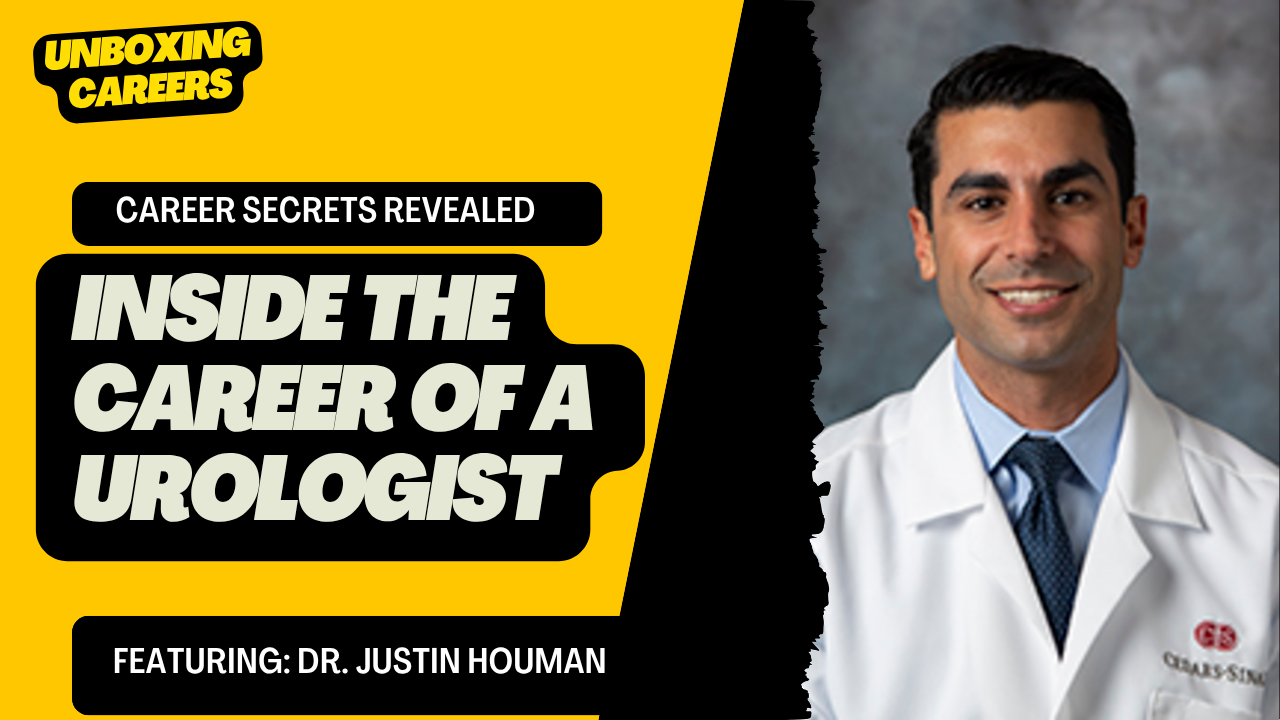
Featured Expert: Dr. Justin Houman is a nationally recognized urologist and Assistant Professor of Urology at Cedars-Sinai Medical Center, specializing in Men’s Health, Male Fertility, and Sexual Medicine. As a fellowship-trained expert, he is committed to optimizing men’s well-being through state-of-the-art, evidence-based treatments for erectile dysfunction, testosterone optimization, Peyronie’s disease, and reproductive health.
Connect with Dr. Houman:
Listen: Spotify | Apple Podcasts | Amazon Music
What Does a Urologist Actually Do?
Urologists treat conditions of the urinary system and the male reproductive system. The field is described as a quality-of-life specialty because most cases focus on improving how patients live rather than handling life-or-death emergencies. Cancer is still a real part of the practice, including prostate cancer, bladder cancer, and kidney cancer, but the majority of cases sit on the quality-of-life side.
One of the distinguishing features of urology is the mix of medicine and surgery. Urologists spend significant time in clinic seeing patients and managing conditions with medical treatment, then move into the operating room for procedures. That blend appeals to doctors who want surgical work without committing to a specialty that's purely OR-based.
Within urology, doctors can subspecialize. Dr. Houman focuses on men's health, specifically male fertility and sexual function. This subspecialty represents a small portion of urology overall but is in higher demand in larger cities where people tend to marry later, and infertility rates run higher.
How Do You Get Into Urology?
Some urologists discover the field through medical school rotations rather than knowing from day one. Dr. Houman planned to pursue orthopedic surgery and switched halfway through his third year of medical school after spending elective time rotating with urologists. His main reason: the personalities in the field fit him better than the personalities in orthopedics.
That advice extends to anyone choosing a medical specialty. Dr. Houman recommends matching your career choice to the personalities you naturally vibe with. Surgery and medicine each have different cultures, and the subspecialties within them differ further.
Urology is competitive to match into. Dr. Houman estimates match rates have moved between roughly 60 percent and 80 percent in recent years. The bottleneck isn't student interest. It's the limited number of residency spots, which has historically been tied to government funding, politics, and finances. More spots are being added now to keep pace with demand, particularly as older urologists retire.
What Does a Typical Week Look Like?
A typical week is split between clinic and surgery:
Three days per week, seeing patients in the office
Two days per week operating
Some weeks shift to four clinic days or three surgery days, depending on volume
Even on slower weeks, there's always something to do. Calling patients back, going over lab results, handling marketing, and managing the business side fill any open time. For urologists in private practice, the work bleeds into weekends. Open the laptop on a Saturday, and the tabs are still there waiting.
Dr. Houman points to autonomy as one of the biggest perks of private practice. Not being in control of your schedule is one of the leading causes of physician burnout, so having full control over your own calendar is a significant lifestyle factor. The tradeoff is that the work never fully stops.
What Surgeries Do Urologists Perform?
The surgical mix depends on the subspecialty. For men's health urologists, the procedures focus heavily on fertility and sexual function. For Dr. Houman, common surgeries include:
Inflatable penile implants: A prosthetic device placed inside the penis with a pump that the patient squeezes to get an erection. The entire device sits under the skin.
Microsurgical varicocelectomies: Procedures that address varicose veins of the testicles, which are the biggest cause of male infertility
Vasectomy reversals
Vasectomies
Kidney stone surgeries
Prostate surgeries
Other endo-urological surgeries
Even subspecialty urologists continue to do general urology work like kidney stone and prostate procedures.
What Career Paths Exist in Urology?
New urologists coming out of residency are increasingly choosing employed positions over private practice. These jobs are typically hospital-employed or part of a larger medical group. The appeal is a comfortable salary on the front end, a predictable income that doesn't depend on patient volume, and no responsibility for running a business.
Private practice is the other path. The financial upside is real, but it comes with significant lifestyle costs, especially in the early years. Dr. Houman went straight into private practice after his fellowship because he had done his training in LA and knew the local landscape. Jumping into private practice in a new city is much harder. The more common approach is to take an employed position first, build savings, and transition into private practice later.
The two paths involve different daily workloads. Employed urologists focus on clinical work. Private practice urologists handle everything from clinical care to managing employees, purchasing supplies, marketing the business, and competing with other practices in their area.
Is There Demand for Urologists?
Yes. Dr. Houman describes the demand for urologists as significant across the country. When he graduated from residency about eight years ago, he estimates only around 250 urologists were graduating nationwide. That number is growing as more residency spots open up, but supply still lags demand.
The shortage means urologists generally aren't competing for patients. Dr. Houman practices near Cedars-Sinai in LA, where two medical towers house around 50 urologists. None of them is starving for business. The volume of need is high enough that the local concentration of urologists doesn't create a problem.
Demand for subspecialty work varies by location. Men's health and fertility work does better in larger cities where infertility rates tend to be higher, partly because people in urban areas often marry later. General urology has a steady demand almost everywhere.
What Is Work-Life Balance Like?
Urology has one of the better work-life balances among surgical specialties. Most cases aren't life-or-death emergencies, which reduces the intensity compared to other surgical fields.
For urologists in private practice, balance still requires intention. The autonomy that makes private practice appealing also means the work follows you home. Dr. Houman describes opening his laptop on weekends and finding himself working through task tabs by default, even when he doesn't have to. His wife notices.
Employed urologists have an easier time enforcing balance because clinical work ends at the door. The business side, the marketing, and the off-hours patient management belong to the hospital or group, not the individual physician.
What Skills Make a Good Urologist?
Not taking yourself too seriously: The work involves intimate topics, awkward conversations, and unusual situations. Urologists who can stay relaxed do better.
Strong hand-eye coordination: Surgery is a significant portion of the job, both in the OR and in the office
Bedside manner above the average physician: Patients come in to discuss erectile dysfunction, sexual dysfunction, urinary issues, and other embarrassing topics. The expectation for comfort and discretion is higher than in many other specialties.
Comfort with the weird: Dr. Houman puts it directly. You see weird things, touch weird things, and smell weird things. Being unfazed is part of the job.
The culture of urology tends to attract doctors who want technical surgical work without the intensity-driven personality of some other surgical specialties.
What Are the Hardest Parts of This Work?
1. Being pulled in many directions at once
Some days are calm. The next day might involve being pulled in 15 directions simultaneously. Calls from clinic staff about waiting patients, pages from residents about hospital admissions, family issues at home, and the patient currently on the operating table all hit at the same time. The time-sensitivity of medicine adds pressure that doesn't exist in many other careers, because patients' lives are involved.
Early in a career, days like this can be draining. Dr. Houman describes coming home feeling like he needed a drink and recognizing he was pulling himself in too many directions. The frequency doesn't go away. He says it still happens at least once a week, sometimes more. Over time, most urologists become more resilient. A lot of the early struggle comes from anxiety about the situation rather than the situation itself, and learning that "it's not as bad as it seems" is part of building that resilience.
2. The lifestyle demands of private practice
In private practice, the business side adds a layer of stress that employed urologists don't face. Patients waiting in the clinic might be upset about delays, which can hurt the business's reputation. Hospital pages can't be ignored. Staff questions need answers. The mental load of running customer service alongside clinical care is significant.
The autonomy of private practice cuts both ways. Full control of your schedule is one of the biggest perks, but the work never fully turns off. Weekends are filled with task tabs, marketing, and business decisions that don't exist in an employed position. Especially early on, the lifestyle requires real sacrifice before the financial upside materializes.
What Makes This Work Rewarding?
Helping people sounds trite, but it is the foundation. Satisfaction takes different forms at different career stages. Early on, the reward comes from being the person patients and families turn to when they have a problem. Being a useful resource for someone in need feels meaningful.
Later in a career, the satisfaction shifts to harder problems. Dr. Houman finds his current job happiness in solving cases that have stumped other doctors. When a patient has seen three or four other urologists without finding answers and arrives looking for a fix, the work requires more thought and planning. He sometimes loses sleep the night before a difficult surgery, thinking through how he'll approach it. When the outcome is good, the satisfaction is significant.
Why Doctors Should Learn the Business Side of Medicine
If there's one piece of advice that comes up from experienced urologists, it's this: learn the business side of medicine. Dr. Houman makes this point directly. Medicine is a business and is becoming more business-driven every year. Doctors who don't understand it get ripped off, whether by employers or through bad contracts.
The most important concept to understand is your own value. What revenue are you generating for the healthcare system that employs you, and what are they paying you? Dr. Houman gives the example of doctors pulling in two million dollars for a healthcare system while being paid a couple of hundred grand. Understanding that gap matters.
An MBA isn't necessarily the answer. The business of medicine is niche enough that general business education only goes so far. What matters is learning the specific dynamics of how medicine works as a business. Resources exist online. AI tools can help explain concepts. The responsibility falls on the individual doctor to seek this knowledge out because no one in medical training will teach it.
Closing Perspective on the Urologist Career
Urology combines surgical work with significant patient interaction, handling conditions that range from common issues like kidney stones to specialized cases involving fertility, sexual health, and cancer. Days move between clinic visits and the operating room, with the constant background work of managing patient care, business operations, and the demands that come with running a practice.
The field has strong demand, one of the better work-life balances among surgical specialties, and a culture that tends to draw doctors who don't take themselves too seriously. If you want hands-on surgical work, can handle intimate conversations without getting flustered, and want a sustainable career in medicine, urology offers a strong fit. Just be ready to learn the business side of medicine alongside the clinical work, because no one in training will teach you that part.
Frequently Asked Questions
Is urology a competitive specialty to match into?
Yes. Dr. Houman estimates match rates have ranged between roughly 60 percent and 80 percent in recent years. The competition stems from a limited number of residency spots historically tied to government funding, not from a lack of student interest.
Do urologists have a good work-life balance?
Urology has one of the better work-life balances among surgical specialties. Most cases are not life-or-death emergencies, which reduces the overall intensity compared to other surgical fields.
What kinds of surgeries do urologists perform?
Common procedures include kidney stone surgery, prostate surgery, penile implants, vasectomies and vasectomy reversals, and microsurgical varicocelectomies for male infertility.
Is there demand for urologists?
Yes. Demand significantly exceeds supply across the country. Older urologists are retiring, and the number of residency spots has historically lagged behind population needs.
What's the difference between private practice and employed urology positions?
Employed positions offer a fixed salary that doesn't change based on patient volume. Private practice income depends on productivity and how well the business is run, with higher earning potential but significantly more lifestyle demands, especially in the early years.
Interested in other healthcare and mental health careers? Check out these episodes:
Listen on: Spotify | Apple Podcasts | YouTube | Amazon Music
Interested in being a guest or partnering with us? Contact us here.